An Anion Gap Calculator is a useful instrument for estimating the anion gap from standard blood chemistry results. By using sodium, chloride, and bicarbonate values, it helps doctors and trainees rapidly assess acid-base balance and identify patterns that may point to an potential disorder. Because these numbers are already part of a standard serum chemistry panel, the calculation can be performed quickly as a diagnostic aid during everyday review of an electrolyte panel.
This article centers on calculator use with chloride values and bicarbonate values, how the anion gap calculation operates, and how to understand the result in practical clinical context. It also covers formula variations, including potassium and albumin adjustments, so you can more clearly understand the corrected anion gap when needed.
What’s the Anion Gap?
The anion gap is a computed number that shows the gap between measured cations and measured negative ions in the blood. It is a way to assess whether there may be additional unmeasured anions affecting the body’s acid-base balance. In routine practice, the calculation is derived from serum electrolytes measured on a serum chemistry panel or expanded blood chemistry test.
Although the anion gap is not a literal measurement of a single substance, it is useful because shifts in the number can point toward an acid-base disorder or another form of metabolic derangement. A within-range result does not rule out disease, but an abnormal result can guide further evaluation and help narrow the underlying cause.
In clinical terms, the anion gap is often used as a screening tool when checking electrolyte patterns. It is particularly helpful when a patient has signs of metabolic acidosis, since the result can show whether the condition involves higher acids, loss of bicarbonate, or another imbalance in the body’s buffer system.
In what way an Anion Gap Calculator Functions
An Anion Gap Calculator uses a simple formula based on standard laboratory measurements. The calculator usually asks for sodium, chloride, and bicarbonate values, then performs the anion gap formula for you. This allows you to get a quick result without doing the math by hand.
The classic version of the calculation is:
Anion gap = sodium - chloride - bicarbonate
Some calculators present the result using the similar structure as Na minus Cl minus HCO3. In that format, sodium is the main measured cation, while chloride and bicarbonate are the main measured anions. The difference between them approximates the amount of unmeasured anions in the blood.
For a user, the workflow is clear:
- Enter the sodium value from the lab report. Input the chloride value. Enter the bicarbonate value, often listed as CO2 or HCO3. Review the calculated anion gap and contrast it with the lab’s reference range.
This approach is especially helpful when reviewing routine serum electrolytes and trying to determine whether an electrolyte imbalance may be altering the overall pattern.
Anion Gap Formula and Typical Variations
The best-known formula is Na minus Cl minus HCO3, but there are regular variations depending on the lab and clinical setting. Some clinicians include potassium in the formula, which slightly modifies the result a bit. Others prioritize the sodium-based calculation because potassium plays a smaller role to the routine interpretation in many settings.
One reason for variation is that the anion gap is influenced by factors such as albumin, a major unmeasured negatively charged protein. When albumin is low, the measured gap may appear decreased than expected. In those cases, a corrected anion gap may provide a more accurate estimate of the patient’s true status.
Albumin correction matters because albumin is one of the biggest contributors to the normal gap. If albumin drops, the calculated number can underestimate the burden of unmeasured anions. A corrected value can therefore improve the clinical picture, especially when evaluating a possible acid-base disorder.
Practical points to keep in mind:
- The calculator may apply sodium, chloride, and bicarbonate only. Some formulas add potassium, which can a little raise the gap. Albumin adjustment may be needed when protein levels are off. Always compare the result with the relevant laboratory reference interval.
Because formulas differ, the same patient may have different results depending on the method used. That is why understanding the specific anion gap formula built into the calculator is important for accurate interpretation.
Understanding the Outcome
Interpretation usually starts from the lab’s expected range. Results are often classified as normal anion gap, high anion gap, or low anion gap. The exact value range varies by laboratory and by whether potassium is part of the calculation, so the calculator should always be reviewed with the reported local range.
A standard anion gap implies that the distribution of measured ions is within expected range. However, a normal result does not rule out disease, particularly if other results point to a notable disturbance in acid-base balance. For instance, a patient may still have metabolic abnormalities that are better evaluated through the bicarbonate level, chloride level, and overall patient picture.
A high anion gap often suggests increased acids or build-up of unmeasured compounds. In contrast, a low anion gap is rarer and may suggest decreased albumin, analytical issues, or specific medical conditions that alter the electrolyte pattern.
When interpreting interpretation, it helps to ask:
- Is the result within the stated reference range? Are the chloride and bicarbonate values consistent with the gap? Does the patient have signs of metabolic acidosis or another metabolic derangement? Could albumin be altering the apparent result?
Because the anion gap is a diagnostic aid, not a final diagnosis, interpretation should always be considered alongside the rest of the https://jsbin.com/kerulocila lab data and the patient’s symptoms.
Causes of a High Anion Gap
A high anion gap often indicates buildup of acids or other nonmeasured substances in the blood. Amongst the most important causes are lactic acidosis, ketoacidosis, renal failure, and exposure to toxic alcohols. These conditions can all cause a substantial acid load or limit the body’s ability to eliminate acids efficiently.
Lactic acidosis occurs when lactate accumulates, often in settings of poor tissue oxygen delivery, severe illness, or other metabolic stress. Ketoacidosis may occur when ketone production goes up, such as in uncontrolled diabetes, prolonged fasting, or alcohol-related metabolic changes. Renal failure can reduce acid excretion, allowing acids to accumulate. Toxic alcohols are a classic trigger of a high gap and should be considered when the history or presentation suggests ingestion.
These causes are often evaluated together with the patient’s bicarbonate level, since a low bicarbonate value frequently accompanies high-gap metabolic acidosis. Nevertheless, the exact pattern can vary, which is why the Anion Gap Calculator is best used as part of a broader workup rather than in isolation.
Reasons of Low Anion Gap
A decreased anion gap is uncommon yet still clinically important. One major cause is hypoalbuminemia, because albumin is a major unmeasured anion. When albumin falls, the calculated gap may decrease even if no other major disorder is present.
Another common explanation is lab error. Since the anion gap depends on sodium, chloride, and bicarbonate, even small measurement problems can affect the result. A repeat test may be appropriate if the finding does not fit the clinical picture.
Other possible causes include hypercalcemia and multiple myeloma. In some cases, abnormal proteins or changes in other measured ions alter the balance enough to lower the gap. If the result is unusually low, checking albumin and considering a corrected anion gap can be particularly helpful.
Overall, a low result should not be dismissed. It may reflect a real underlying problem, or it may be a clue that the calculator output needs to be rechecked against the actual laboratory values and the broader clinical context.
Why Chloride and Bicarbonate Are Important
The chloride level and bicarbonate concentration are key to the calculation because they are the primary measured anion inputs used in most versions of the formula. When chloride rises or bicarbonate falls, the gap can change suddenly, which makes these numbers especially helpful in evaluating electrolyte imbalance and acidic metabolic state.
Chloride often increases in conditions where bicarbonate is lost or diluted, while bicarbonate commonly decreases in acidotic states. The relationship between the two provides insight into how the body is handling acids and bases. This is why anion gap review is often part of the broader assessment of acid-base balance.
Using chloride and bicarbonate values together can reveal patterns that might not be obvious from either number alone. For example, a low bicarbonate with a normal or elevated chloride may point to a different process than a low bicarbonate with a high gap. This makes the anion gap a practical way to guide the interpretation of serum electrolytes.
Step by Step Example Calculation
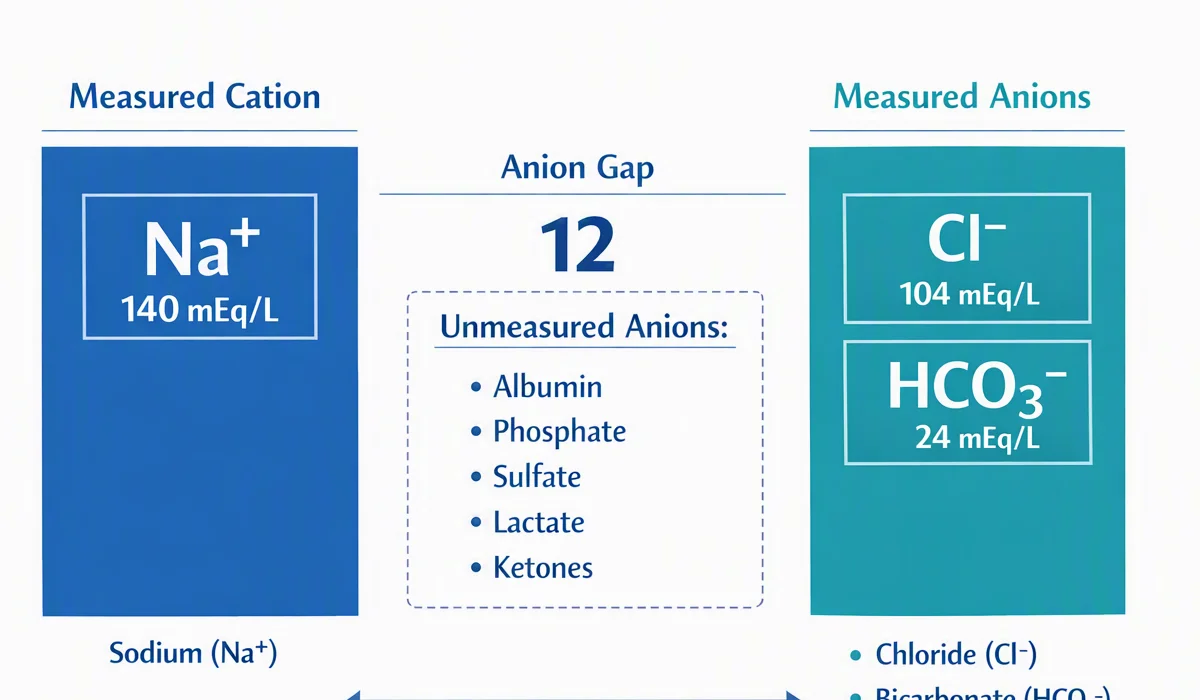
Here is a simple example using typical sample values to show the manual calculation process.
- Sodium = 140 Chloride = 104 Bicarbonate = 24
Using the anion gap formula:
Anion gap = sodium - chloride - bicarbonate
Replace the values:
140 - 104 - 24 = 12
The calculated anion gap in this example is 12. If the laboratory’s normal range includes 12, then this would be interpreted as a normal result. If the lab’s range differs, the interpretation should follow the local local reference.

Then consider a second example:
- Sodium = 138 Chloride = 100 Bicarbonate = 16
Computation:
138 - 100 - 16 = 22
This elevated result may indicate a high anion gap, which would prompt review for causes such as lactic acid buildup, ketoacidosis, renal failure, or toxic alcohol ingestion. The resulting reading depends on signs, history, and the rest of the blood chemistry.
Limitations and Medical Considerations
Even a well-designed Anion Gap Calculator has limitations. A major issue is adjusting for albumin. Because albumin affects the gap, a patient with low albumin may have a misleadingly low or normal result unless a albumin-corrected anion gap is considered.
Lab variability is another important factor. Different analyzers and local methods can lead to slightly different sodium, chloride, and bicarbonate results. That means the calculator output may shift depending on where the sample was processed. For that reason, comparison with the relevant normal range is essential.
Clinical interpretation also matters. A numerical result should be read in light of symptoms, medication use, recent illness, and the larger pattern of electrolyte levels. Sometimes an arterial blood gas test is needed to better define the acid-base status, especially when the bicarbonate level and clinical presentation do not match the calculated gap.
In other words, the calculator is useful, but it is not a substitute for professional evaluation. It works best as part of a complete assessment of the clinical picture, especially when the result could signal a serious disorder or a rapidly changing condition.
Frequently Asked Questions
How do you calculate the anion gap using chloride and bicarbonate values?
Use the standard anion gap equation: sodium minus chloride minus bicarbonate, often written as Na minus Cl minus HCO3. Enter the Na, Cl, and bicarbonate values into an Anion Gap Calculator, or calculate it manually by subtracting chloride and bicarbonate from sodium. Some formulas also include K, so check which version is being used.
What is a normal anion gap range?
A normal anion gap depends on the laboratory and the formula used, so the best guide is the lab-specific reference range. Many labs provide a range that is based on their analyzer and whether potassium is included. Always read the number using the lab’s own laboratory reference interval rather than assuming one universal value.
What does a high anion gap mean?
A high anion gap often means there are extra unmeasured anions in the blood, which can happen in metabolic acidosis. Common causes include lactic acidosis, ketoacidosis, renal failure, and toxic alcohols. The result should be interpreted with the patient’s presentation, bicarbonate level, and overall clinical context.
Can low albumin affect the anion gap result?
Yes. Hypoalbuminemia can lower the measured anion gap because albumin is a major unmeasured anion. In that situation, a corrected anion gap may be more informative than the raw value. If albumin is low, the calculator result may underestimate the true acid-base abnormality.
How accurate is an Anion Gap Calculator?
The calculator is usually precise for the numbers entered, but the final meaning depends on the quality of the lab results and the way the formula is set up. Lab error, lab variability, and missing albumin information can affect the result. So while it is a useful screening tool and diagnostic aid, it should always be paired with clinical judgment and, when needed, additional testing such as an arterial blood gas.
If you are using the calculator and the result seems unexpected, review the input values, confirm the chloride values and bicarbonate values, and consider whether a corrected value is needed before making a conclusion about the patient’s acid-base balance.