Why the anion gap Measures
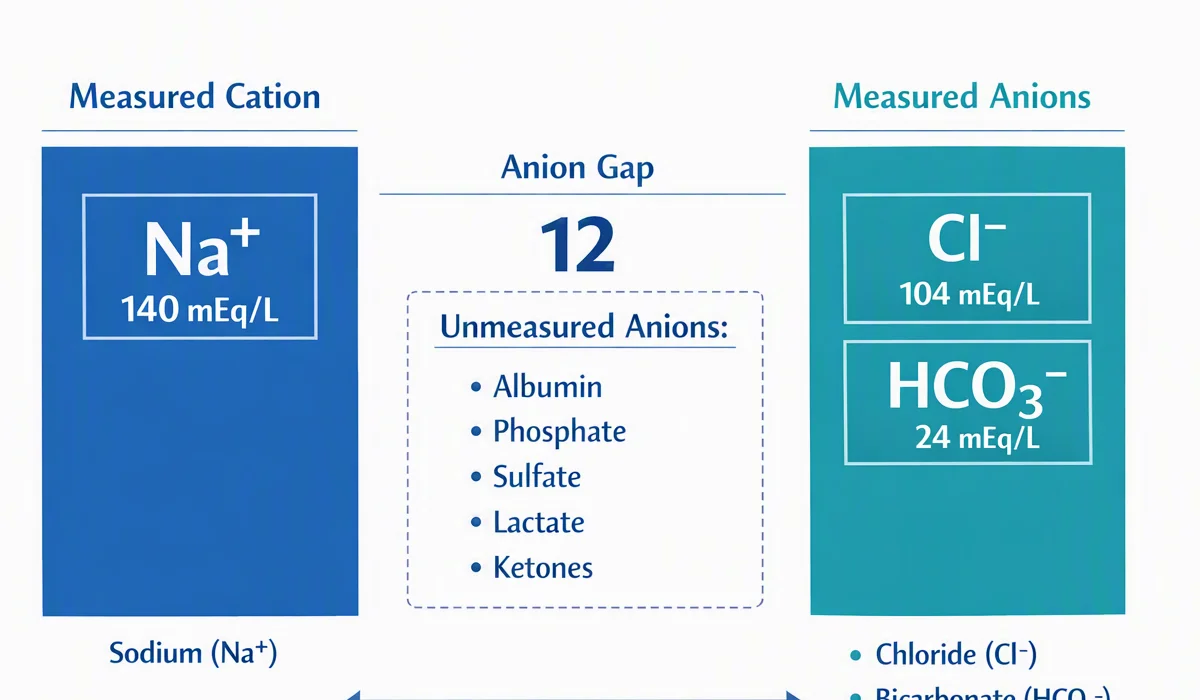
The anion gap is a computed value from a basic electrolyte panel that helps evaluate blood test interpretation in suspected acid-base problems. It shows the relationship between main measured ions, especially serum sodium, serum chloride, and serum bicarbonate. In plain language, the anion gap indicates the amount of unmeasured ions in the blood and can serve as a practical anion gap ESRD diagnostic marker for certain metabolic problems.
Because the body works to maintain electroneutrality, the total positive and negative charges in blood should remain balanced. When measured ions shift, the anion difference can indicate an underlying acid-base disorder. A change in the gap often signals a metabolic derangement such as metabolic acidosis, where acids increase or bicarbonate is depleted.
The concept is especially valuable in serum chemistry because it gives clinicians a rapid clue about whether the patient may have a high anion gap, a normal anion gap, or a low anion gap. That clue can shrink the list of possible causes and direct further testing.
How an Anion Gap Calculator Works
An anion gap calculator relies on a straightforward calculation formula built on standard laboratory values. Many calculators prompt for serum sodium, serum chloride, and serum bicarbonate. Certain versions also allow potassium, which produces a potassium value-based adjustment to the result.
The calculator performs an adjusted calculation that mirrors the underlying chemistry of the blood. Sodium is the primary measured cation, while chloride and bicarbonate are principal measured anions. The unmeasured difference helps estimate unmeasured ions. This can be valuable in blood test interpretation because the result may suggest a hidden acid load, a change in bicarbonate level, or an abnormal change in the sodium chloride balance.
In practice, the calculator is a shortcut for understanding whether there is a gap in the measured ions that could indicate a specific problem. It does not replace a full clinical review, but it can be a practical first step in checking acid-base balance.
Formula for Anion Gap Using and Omitting Potassium
There exist two widely used ways to work out the gap: a standard formula and a formula including potassium. The traditional formula usually uses sodium, chloride, and bicarbonate. The potassium-based version adds serum potassium to the cation side of the equation.
A standard traditional formula is:
Anion gap = serum sodium - (serum chloride + serum bicarbonate)
The potassium-inclusive formula is:
Anion gap = (serum sodium + serum potassium) - (serum chloride + serum bicarbonate)
Each method can be valid, but they do not produce the same number. The potassium-added formula usually gives a slightly higher value because potassium is added to the cation total. Because of that, the normal range depends on which formula is used and on the laboratory reference range reported by the lab.
Most clinicians focus on whether the result falls within the expected reference interval for that specific method. A calculator should clearly identify whether it is using the traditional or potassium-inclusive approach, since misreading the formula can lead to confusion in clinical interpretation.
How to Enter Blood Test Values Correctly
Precise results depend on entering the correct numbers for blood sodium, chloride, bicarbonate, and optionally blood potassium. These values should come from the same specimen and same time period whenever possible, since mixed timing can alter the result.
These are the key points to watch:
- Select the reported serum sodium value as given as listed. Use serum chloride from the same panel, not a estimated value. Select the measured serum bicarbonate or total CO2 if that is what the lab shows. If the calculator includes blood potassium, use the serum potassium value from the same blood sample. Check units carefully so the inputs match the calculator’s expected format.
Minor input errors can create a inaccurate low gap result or hide a true high anion gap. If the numbers seem inconsistent with the patient’s condition, confirm the laboratory values before drawing conclusions.
Interpreting a Elevated Anion Gap
A high anion gap commonly implies surplus acids are contained in the body. It is a classic pattern in metabolic acidosis and is frequently called high gap acidosis. The main causes include lactic acidosis, ketone-related acidosis, kidney failure, and toxic alcohols or other poisoning.
In lactic acidosis, lactate accumulates because of reduced oxygen delivery, shock, severe infection, or impaired metabolism. In ketotic acidosis, ketones increase due to insulin deficiency, starvation, or alcohol-related metabolic states. Renal insufficiency can reduce acid excretion and let unmeasured acids to build up. Poisonous alcohols such as methanol or ethylene glycol can also produce a significant gap because their metabolites are acidic.
When the gap is high, the central question is not only what the number is, but what it means in the overall clinical setting. Symptoms, medication history, kidney function, glucose, lactate, ketones, and toxicology may all matter. The anion gap is a clue, not the final diagnosis.
Interpreting a Normal or Decreased Anion Gap
A anion gap in the normal range does not rule out acid-base disease. It may simply mean the body’s measured ions are balanced within the normal range. Some forms of metabolic acidosis, especially those with a rise in chloride, may show up as a normal gap rather than a high one.
A reduced anion gap is not as frequent and requires careful review. One major cause is hypoalbuminemia, because albumin is a negatively charged protein that adds to the unmeasured anion pool. When albumin is low, the gap can drop even if there is no major acid-base problem.
Other explanations include lab error, hyperchloremia, and paraproteinemia. Hyperchloremia can decrease the gap because chloride rises compared with sodium and bicarbonate. Paraproteinemia, such as that seen in some plasma cell disorders, may also distort the expected balance of ions. Because of this, a low value should be compared against the full serum chemistry panel and repeated if needed.
In many cases, the most useful next step is to look for a measurement issue, verify albumin, and evaluate whether the result matches the patient’s condition. A low gap can be real, but it can also be a clue that the sample or calculation should be reviewed.
When Potassium Changes the Result
Including serum potassium in the formula can affect the final number, but the size of the change is often limited. The reason some calculators provide a potassium-inclusive formula is tied to electroneutrality: potassium is a true cation and contributes to the total positive charge in the blood.
In routine practice, potassium may slightly raise the calculated gap, yet the clinical significance depends on how the result is being used. If the potassium value is normal, the difference between the standard and potassium-inclusive methods may not change management. If potassium is markedly abnormal, the adjusted anion gap can give a more complete picture of the electrolyte state.
That said, most clinicians still rely on the traditional approach because it is widely used in labs and textbooks. The potassium-inclusive method can be especially useful when a calculator is designed to represent the full measured cation load and when you want a more detailed view of the patient’s electrolytes.
The practical point is this: potassium matters, but whether it modifies the interpretation depends on the scenario. A calculator that accepts potassium can be a better fit for detailed review, while still requiring sound clinical interpretation.
Limits of Internet Anion Gap Calculators
Web-based calculators are convenient, but they have notable limits. Initially, they use fixed reference limits that may not match every lab’s lab reference range. Different analyzers, patient groups, and formulas can produce different expected values. A number that looks abnormal in one setting may be acceptable in another.
In addition, many calculators do not adjust for albumin correction. Because low albumin can lower the anion gap, uncorrected results may underestimate the presence of an acid load. A proper review may require considering albumin as well as the measured electrolytes.
Also, blood gas and chemistry results are not interchangeable. A venous blood gas may help assess pH and bicarbonate, but its values are not identical to a standard chemistry panel. That difference matters when evaluating metabolic acidosis or a suspected acid-base disorder.
Last, calculators cannot replace clinical context. A result must be interpreted alongside symptoms, medications, kidney function, glucose, ketones, lactate, and other lab findings. The calculator is a tool for pattern recognition, not a standalone diagnosis.
Frequently Asked Questions
What is an anion gap calculator used for?
An anion gap calculator is used for blood test interpretation when reviewing a serum chemistry panel. It helps estimate whether there is a hidden acid load, making it useful for detecting metabolic acidosis, especially high anion gap states. It can also help identify a normal anion gap or low anion gap that may need further review.
Should potassium be included in the anion gap formula?
Potassium is included in some formulas, especially the potassium-inclusive formula, but not all calculators use it. The traditional formula is more common, while the potassium version may better reflect total measured cations in certain cases. Whether to include potassium depends on the calculator design, lab method, and the purpose of the clinical interpretation.
What’s a normal anion gap range?
The normal range depends on the calculation method and the lab. Some labs use a different lab reference range for the traditional calculation than for the potassium-inclusive method. Because of this, the best approach is to evaluate the result with the specific reference interval reported by the laboratory rather than relying on one universal number.
What may a high anion gap mean?
A raised anion gap usually indicates acid buildup from unmeasured acids. Common causes include elevated lactate, ketotic acidosis, renal failure, and poisonous alcohols or other forms of toxic ingestion. It is a clue that should be interpreted with the rest of the electrolyte panel and the patient’s clinical context.
Can lab error or low albumin cause a low anion gap?
Yes. A low anion gap can be caused by testing error or from hypoalbuminemia, since the albumin level is a major unmeasured anion. Other causes include high chloride and monoclonal protein excess. If the result is unexpected, it is reasonable to verify the serum sodium, serum potassium, blood chloride, and serum bicarbonate values and examine the full laboratory picture.